Sea freight
Sea freight is the most cost-effective way to move larger volumes over long distances. DTA Logistics organises container shipments worldwide, as full containers or as part of a shared container, including pickup, customs clearance and delivery.
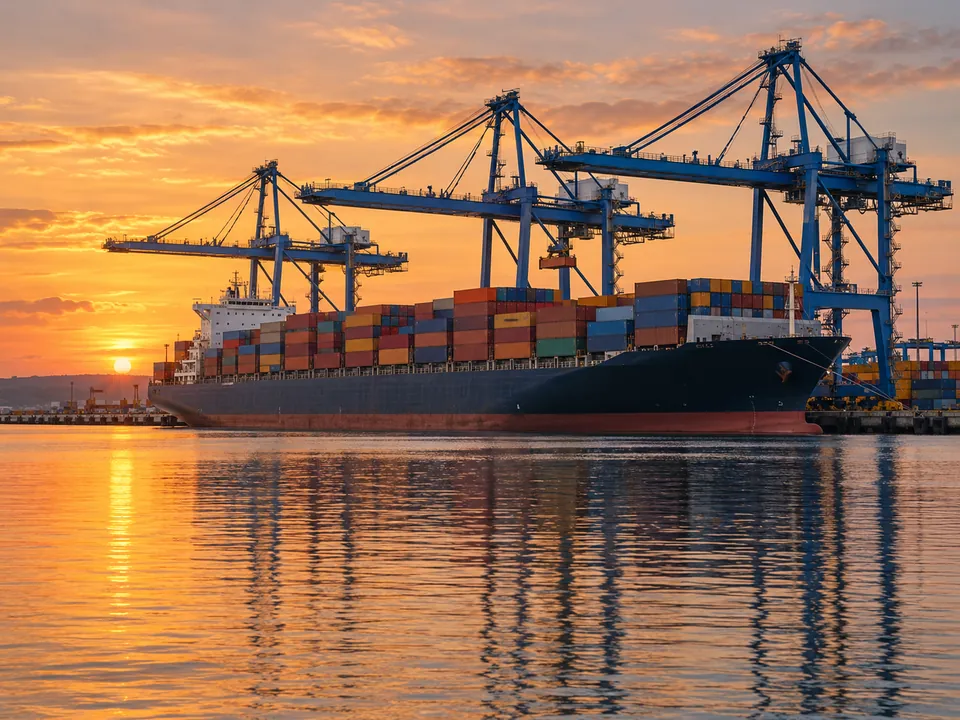
You book a whole container for your goods. It is loaded at the shipper or at a warehouse, sealed and only opened again at the destination or for customs inspection. FCL makes sense when your goods fill a large part of a container, or when they should travel without being handled together with other shipments. The most common sizes are 20 ft and 40 ft standard containers and 40 ft high cube containers with more height. For special cargo there are other container types.
Your goods share a container with other shipments, and you pay for the space you use, by volume in cubic metres or by weight, whichever is higher. That makes sea freight affordable even for a few pallets or cartons. Because your goods are handled together with other shipments, stable, palletised and labelled packaging matters.
01
Pickup at the shipper and transport to the port of loading
02
Export customs clearance and bill of lading (B/L)
03
Sea transport to the port of discharge
04
Import customs clearance
05
Delivery to the consignee by truck
For LCL the volume in cubic metres counts, for FCL the container size.
Direct services are faster, routes with transshipment take longer.
Transport to the port and from the port to the final address.
Clearance at origin and destination.
Pickup address and delivery address
Number of packages, weight and dimensions, or the container size you need
Description of the goods
Incoterm (for example FOB, CIF, DAP)
Desired loading date
At a certain volume, a full container becomes cheaper than LCL. We compare both options for your shipment and tell you which one makes sense.
Ask for a comparison →It depends on route and volume. From a certain volume, FCL costs less per cubic metre. Send us your shipment details and we compare both.
Usually a commercial invoice and a packing list. We take care of the bill of lading and the customs documents.
Yes. We organise pickup and delivery by truck, so you have one contact for the whole shipment.
Request a sea freight quote
The online form is the fastest way. It asks for everything we need.